Sample & Design Support
Turning Knitwear Concepts into Production-Ready Samples
A successful knitwear collection begins long before bulk production. It begins with a well-developed sample that allows the brand, designer, and manufacturer to review how an idea performs as a real garment.
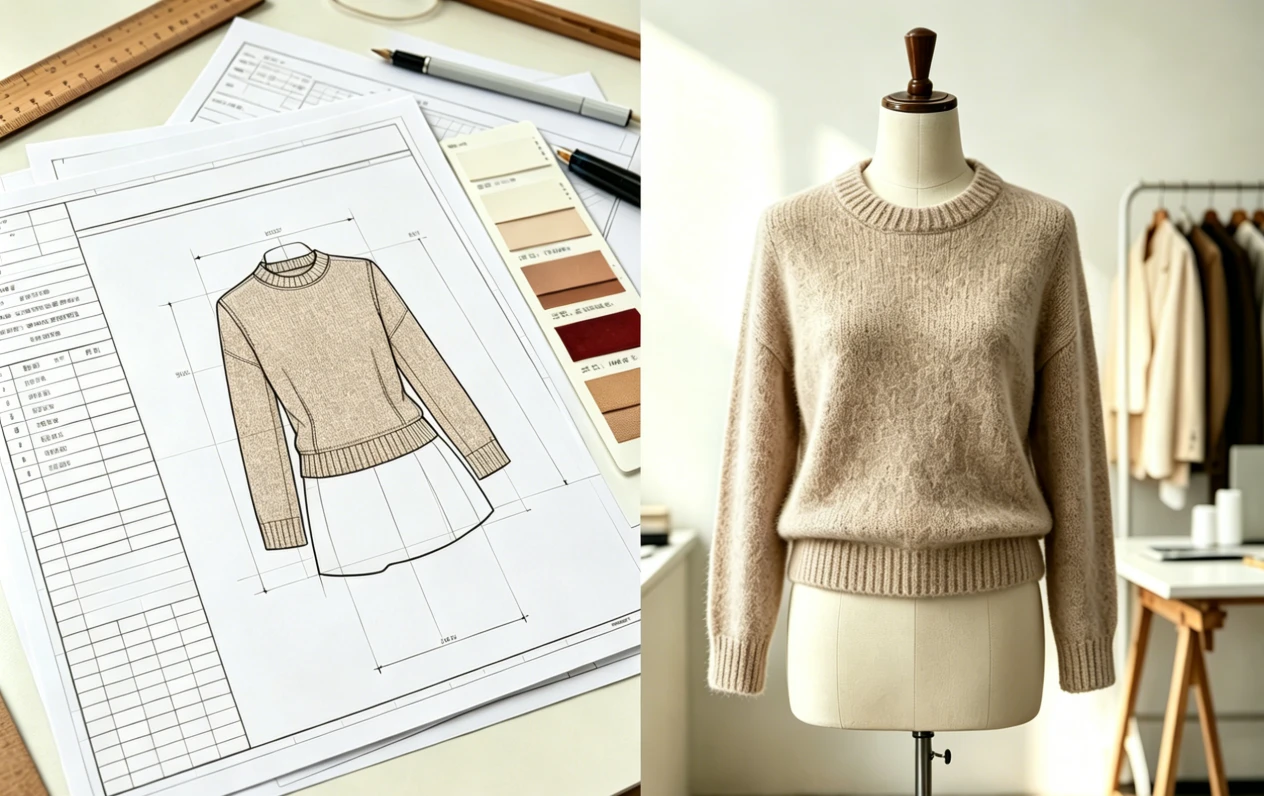
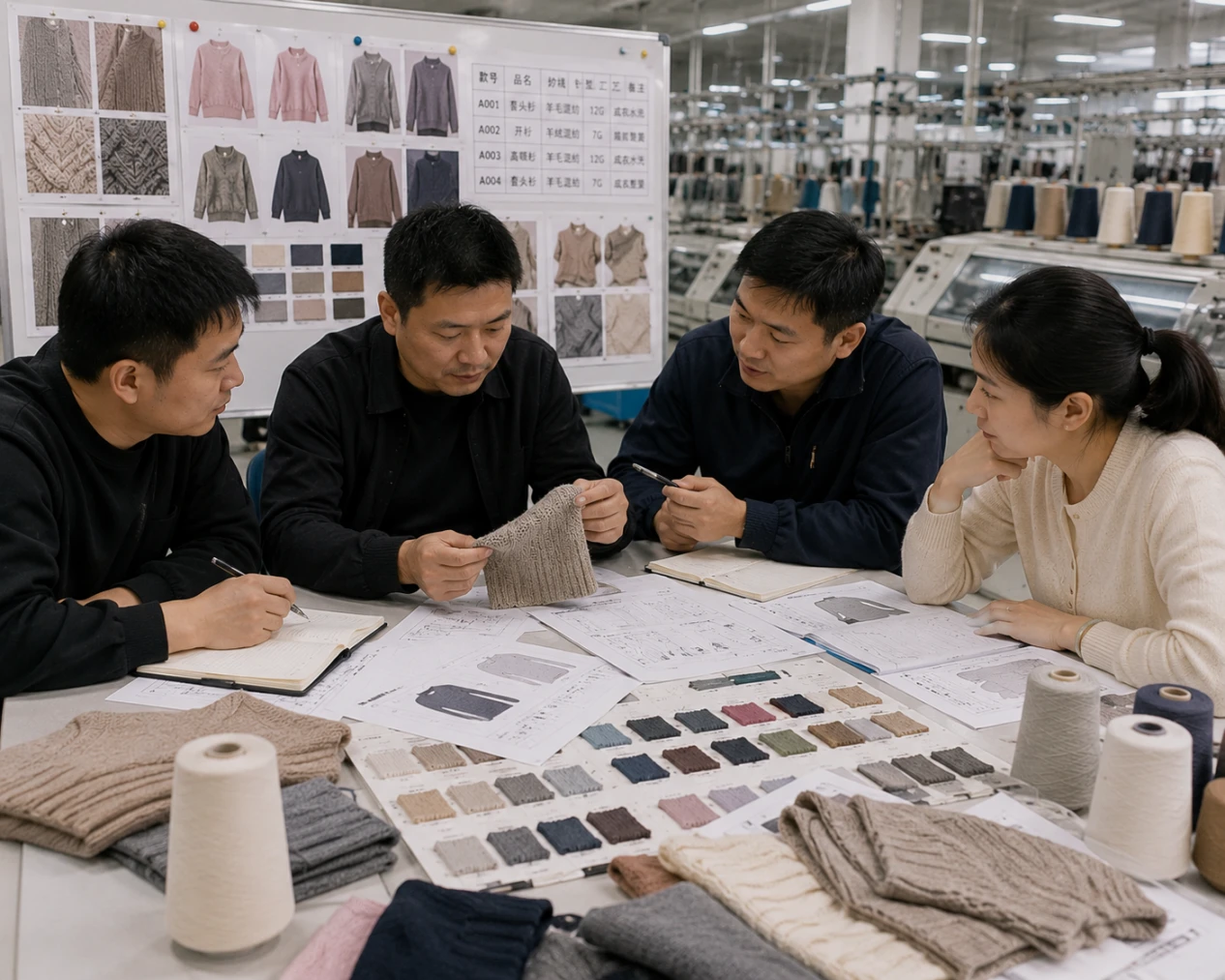
At Tesin Knitwear, we provide sample and design support for fashion brands, retailers, sourcing companies, private labels, and emerging labels. Whether your project begins with a complete tech pack, a design sketch, a reference garment, or an inspiration image, our team helps translate your idea into a manufacturable knitwear product.
Our goal is not only to make a sample. We help clients evaluate fit, construction, proportions, material suitability, finishing details, and production feasibility before larger production decisions are made. This helps reduce revisions, avoid misunderstandings, and create a stronger foundation for bulk production.
Supporting Different Design Inputs
Every project starts with a different level of information. Some clients provide detailed technical packages with measurements, artwork placement, trims, colors, and packaging requirements. Others may only have sketches, reference garments, market samples, or images from trend research.For tech pack-based projects, we review all technical details before development starts and confirm any unclear points with the client. For sketch-based or inspiration-based projects, we help interpret the design intention and convert visual ideas into practical development plans.
Yarn & Material Selection
Choosing Materials That Match Your Product Vision
In knitwear development, yarn selection is one of the most influential decisions a brand can make. Long before a garment reaches production, the chosen yarn begins shaping its appearance, hand feel, performance, customer perception, and market value.
A cotton sweater creates a completely different wearing experience from a Merino wool sweater. A cashmere cardigan communicates a different level of luxury from an acrylic blend. Even when the design, color, and silhouette remain the same, the material can dramatically change how consumers perceive the garment.
At Tesin Knitwear, we help clients evaluate yarn and material options from a product development perspective. We consider product positioning, seasonality, performance expectations, sustainability goals, target price, and commercial requirements so the material supports both the garment and the collection as a whole.
Understanding Knitwear Material Categories
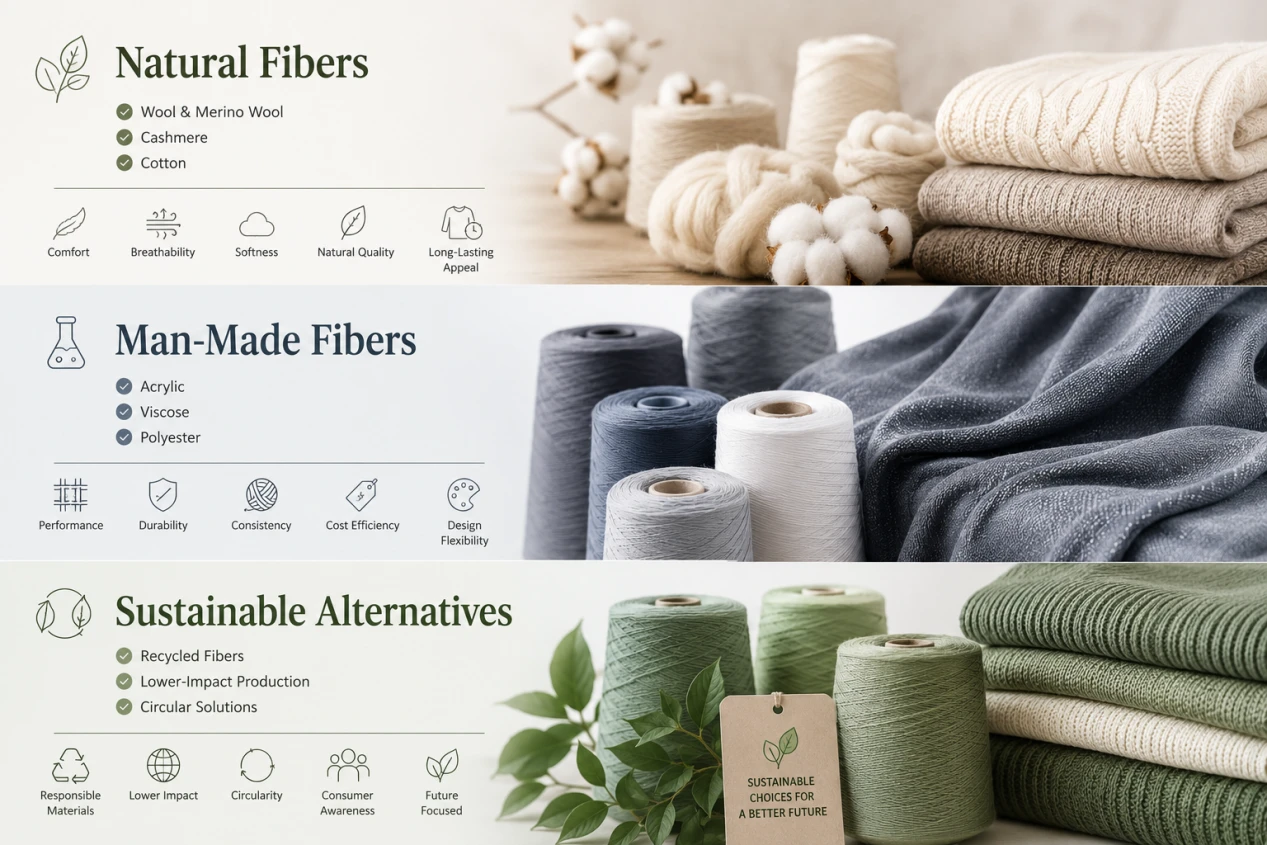
- Modern knitwear offers a wide range of yarn choices. Most options can be understood through three broad categories: natural fibers, man-made fibers, and sustainable alternatives.
- Natural fibers such as wool, Merino wool, cashmere, and cotton are valued for comfort, breathability, softness, warmth, and authentic material appeal. They are often used in premium or timeless collections because they can communicate quality and long-term value.
- Man-made fibers such as acrylic, viscose, and polyester play an important role in modern knitwear. They can support cost control, durability, color consistency, shape retention, drape, and easy-care performance. When used thoughtfully, they are not simply substitutes for natural fibers but useful tools for achieving specific product goals.
- Sustainable alternatives, including recycled polyester, recycled wool, recycled cotton, and lower-impact yarn options, are increasingly important for brands that want to align product development with environmental objectives. These materials should still be evaluated for comfort, durability, appearance, and commercial practicality.
Understanding Knitwear Material Categories
- Cashmere remains one of the most recognized luxury fibers in knitwear. Its softness, warmth, lightweight feel, and refined appearance make it suitable for premium sweaters, cardigans, scarves, and elevated wardrobe staples. For many brands, cashmere helps strengthen the perceived value of the entire collection.
- Merino wool is valued for its balance of softness, warmth, breathability, and versatility. Compared with traditional wool, Merino fibers are finer and often more comfortable against the skin. This makes Merino suitable for premium basics, lightweight sweaters, layering pieces, and contemporary collections that need comfort and performance at the same time.
- Traditional wool continues to be important for autumn and winter knitwear. It provides warmth, resilience, texture, and a classic seasonal identity. Wool is especially suitable for heritage-inspired products, cold-weather garments, and styles that need a substantial, character-driven appearance.
- Cotton is often selected for comfort, breathability, and year-round versatility. It is especially useful for spring and summer programs, lightweight knitwear, and products that target a broad customer base. Cotton can provide an approachable option for customers who do not usually purchase wool-based knitwear.
The Role of Acrylic, Viscose, and Polyester
- Acrylic can help brands create soft, lightweight, and visually attractive products while maintaining accessible price points. It is often used in commercial knitwear programs or blended constructions where affordability and color adaptability are important.
- Viscose contributes fluidity, drape, softness, and elegance. It is particularly useful in fashion-forward women’s knitwear, lightweight cardigans, ribbed styles, and products where movement and a smooth hand feel are important.
- Polyester can improve durability, shape retention, wrinkle resistance, and garment stability. It is often used in blends to support performance, production consistency, and long-term wearability.
- The key question is not whether a material is natural or synthetic. The more important question is whether the yarn supports the intended purpose of the product.

- Many brands begin by asking which fiber they should use. A more effective approach is to define what the product needs to achieve before finalizing the fiber composition.
- Important questions include: Who is the target customer? Where will the product be sold? What price range should it occupy? How should the garment feel when worn? What role will it play within the collection? How important are warmth, softness, drape, durability, sustainability, and easy care?
- For premium collections, materials often become part of the product story. Fibers such as cashmere, Merino wool, and high-quality wool blends can communicate luxury, comfort, exclusivity, and long-term value. For contemporary collections, brands may prioritize materials that feel premium while remaining versatile and suitable for everyday wear.
- For commercial programs, material selection is closely linked to target price and volume requirements. The goal is not simply to reduce cost, but to identify yarns that provide attractive appearance, satisfactory comfort, and stable performance within a defined price structure.
- Seasonality should always guide material decisions. Spring and summer knitwear usually requires breathability, lightness, and easy wear. Autumn and winter products often require warmth, softness, texture, and seasonal comfort without becoming too bulky or restrictive.
- Price positioning is equally important. Entry-level products require materials that deliver strong visual appeal and reliable performance within strict cost targets. Mid-market products need a balance of comfort, durability, appearance, and price. Premium products must provide a noticeable difference in hand feel, finishing, and overall customer experience.
- Sustainability should be considered together with performance and product longevity. A responsible material choice is strongest when the final garment remains desirable, wearable, durable, and relevant to the consumer over time.
- Tesin Knitwear helps clients compare yarn options, review fiber compositions, evaluate hand feel, consider gauge and technique compatibility, and align material choices with product positioning and cost targets.
- Whether you are developing a luxury cashmere program, a premium Merino collection, a contemporary cotton line, a commercial fashion range, or a sustainability-focused product using recycled fibers, we help make yarn selection a strategic advantage rather than a technical challenge.
Knitting Techniques & Design Details
Bringing Knitwear Designs to Life Through Technical Expertise
In knitwear development, yarn selection is only part of the equation. The same yarn can create dramatically different results depending on how it is knitted, constructed, and finished.
Texture, structure, pattern, dimension, and decorative effects are all influenced by technical decisions made during development and production. For fashion brands, selecting the right knitting technique is not only a manufacturing consideration. It is an important design decision that affects product appearance, customer perception, retail value, and market differentiation.
At Tesin Knitwear, we work closely with clients to evaluate knitting structures, decorative applications, and technical possibilities that support the design objective. Our goal is to execute designs accurately while helping brands understand how different techniques influence the final garment.
Building Visual Identity Through Knit Structures
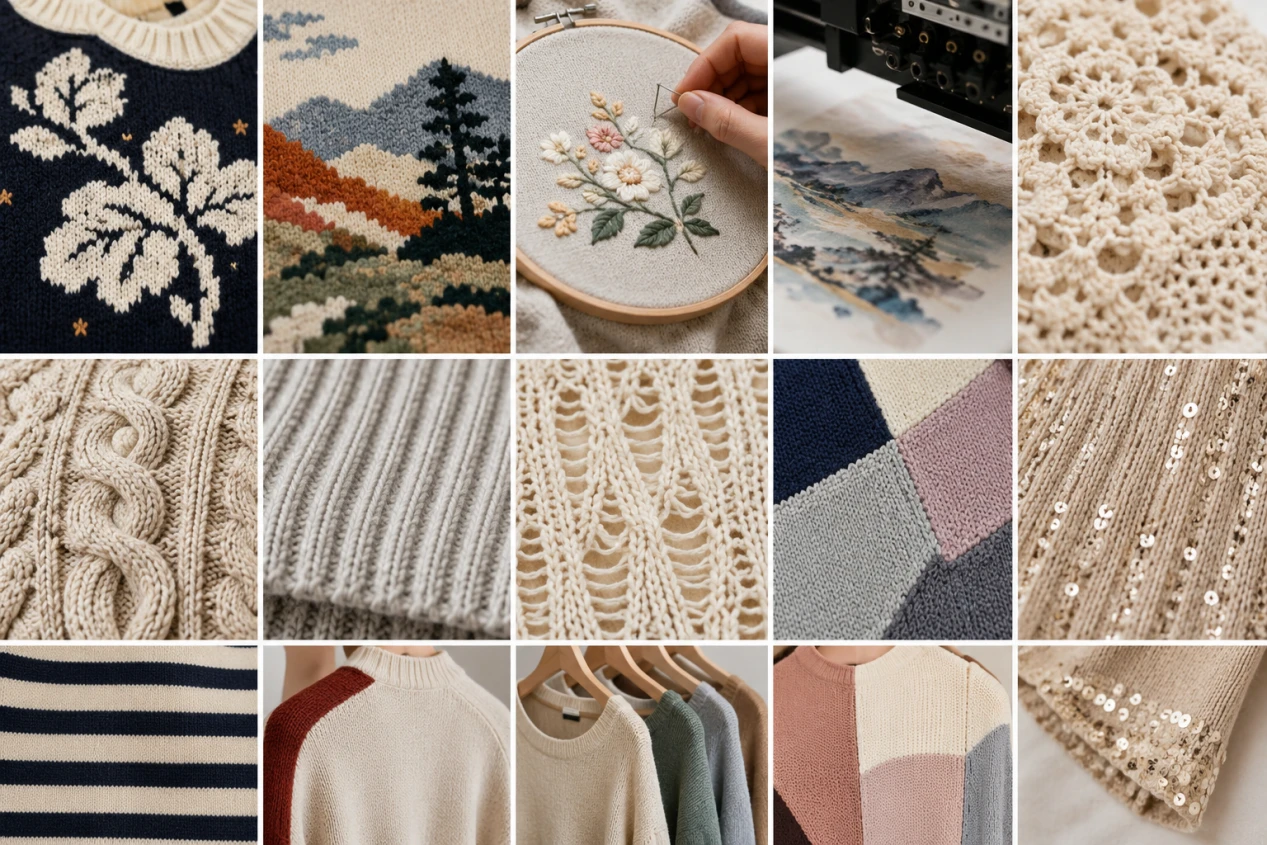
- One of the unique advantages of knitwear is its ability to create visual interest directly through fabric construction. Unlike many woven garments that rely mainly on surface decoration, knitwear can generate texture, pattern, graphics, and dimension within the fabric itself.
- Different knit structures communicate different messages. Some create a refined and minimalist appearance, while others introduce bold texture, artisanal character, or strong graphic impact. The selected structure should support the broader design vision of the collection and the expectations of the target customer.
Gauge Selection and Knit Density
- Gauge refers to the number of needles used within a specific width of a knitting machine. It plays a major role in how a garment looks, feels, drapes, and performs. Although consumers may not know the technical specification, they immediately notice its effects through texture, weight, and appearance.
- Lower gauge constructions usually create heavier, chunkier, and more textured fabrics. They are often used for autumn and winter styles, oversized sweaters, heritage-inspired products, and garments that need warmth and visual depth.
- Higher gauge constructions create a smoother, lighter, and more refined appearance. Fine gauge knitwear is often easier to layer and is suitable for premium essentials, contemporary collections, and products that need versatility across seasons.
- Tesin helps clients evaluate gauge options early in development so the final garment achieves the desired aesthetic, hand feel, silhouette, and wearing experience.

- Tesin Knitwear supports brands by reviewing design concepts, recommending suitable knit structures, testing technical solutions, checking production feasibility, and helping optimize details for bulk manufacturing.
- The right combination of yarn, gauge, structure, construction, and decoration can transform a simple idea into a distinctive commercial product. Our technical support helps clients make these decisions with greater confidence.
- Jacquard is one of the most versatile techniques in knitwear development. It allows patterns, graphics, artwork, geometric motifs, and branding elements to be integrated directly into the knitted fabric through controlled yarn placement.
- Jacquard can be subtle and tonal for a refined look, or bold and graphic for statement products. Because the design becomes part of the fabric structure, jacquard often creates a more premium appearance than many surface decoration methods.
- Intarsia offers a different approach to color and graphic development. It is often used for larger color blocks, clean graphic shapes, logos, motifs, and statement designs. Intarsia can create clear visual separation between colors and is useful when the design requires a cleaner back side than certain jacquard constructions.
- For both techniques, our team evaluates artwork scale, color count, yarn suitability, machine capability, garment placement, and production stability before development proceeds.
- Cable knit structures create raised, twisted, and dimensional patterns that communicate warmth, craftsmanship, and classic knitwear identity. They are widely used in heritage sweaters, autumn and winter collections, and premium styles that require a rich surface texture.
- Rib knit structures are valued for elasticity, recovery, and clean appearance. They can be used for collars, cuffs, hems, body panels, fitted silhouettes, and modern minimalist designs. Rib selection influences both appearance and garment performance.
- Texture stitches, drop stitch, mesh, and openwork effects can add lightness, breathability, and visual detail. These techniques are useful for spring and summer knitwear, fashion-forward pieces, and styles that need a softer or more decorative surface.
- Crochet and handcrafted effects can add artisanal character and a softer handmade feeling to knitwear products. These details are especially effective for resort collections, feminine styles, bohemian-inspired products, and limited seasonal designs.
- Embroidery can add logos, motifs, lettering, floral elements, or decorative accents to knitted garments. It should be planned carefully because embroidery weight, placement, yarn thickness, and fabric stretch can all influence the final result.
- Printing on knitwear can create artwork and graphic effects, but it requires careful evaluation of fabric surface, stretch, yarn composition, and color absorption. Not every knit structure is suitable for printing, so technical review is important before approval.
- Tesin Knitwear supports brands by reviewing design concepts, recommending suitable knit structures, testing technical solutions, checking production feasibility, and helping optimize details for bulk manufacturing.
- The right combination of yarn, gauge, structure, construction, and decoration can transform a simple idea into a distinctive commercial product. Our technical support helps clients make these decisions with greater confidence.
Color Matching Support
Improving Color Accuracy from Sampling to Bulk Production
Color accuracy is a critical factor in apparel development and bulk production. Inconsistent color between yarn, lab dips, samples, and production goods can lead to approval delays, customer complaints, product returns, and additional costs.
At Tesin Knitwear, we provide color matching support throughout the development and production process. Our goal is to help clients define clear color standards, improve color communication, and reduce the risk of shade variation in knitwear orders.
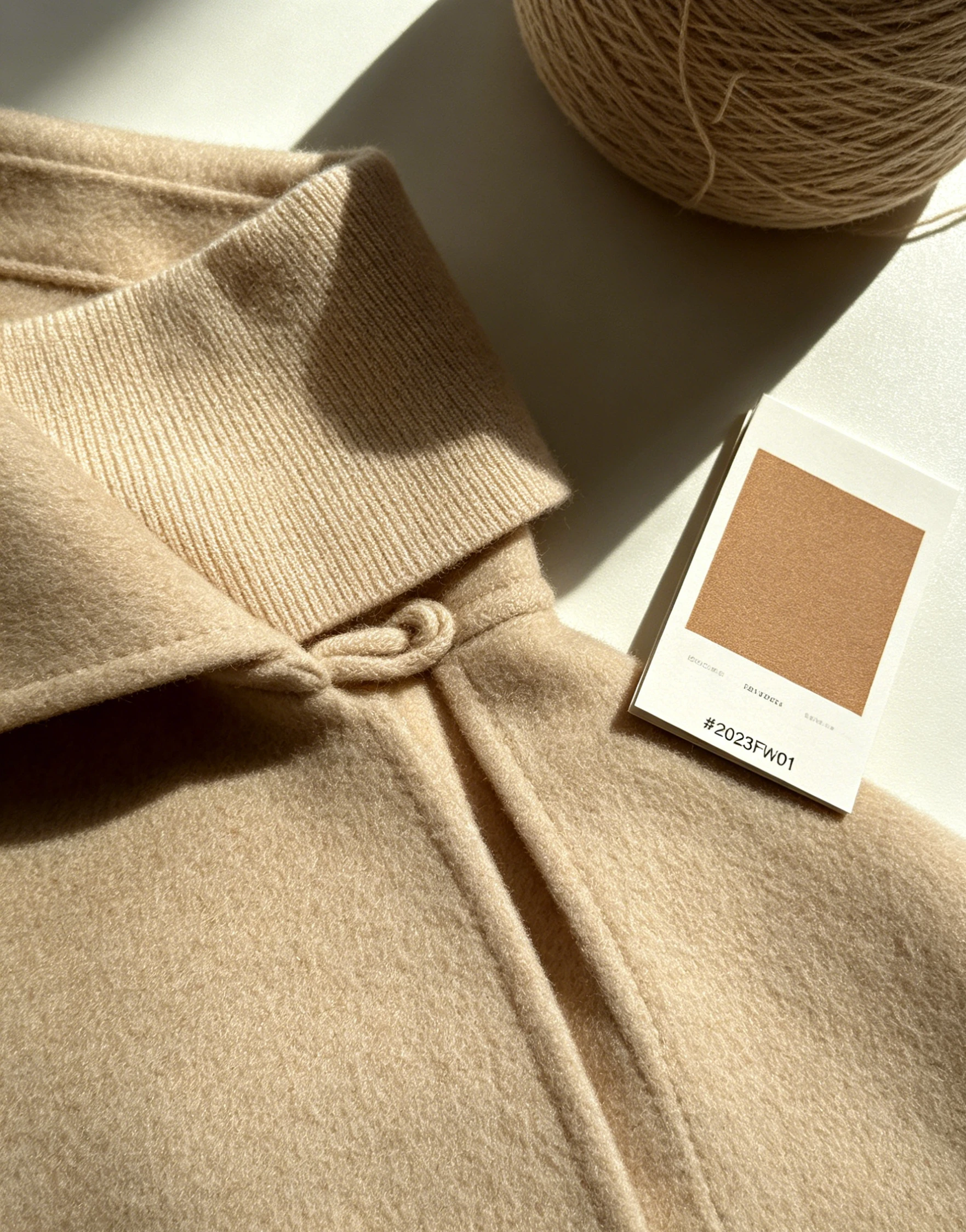
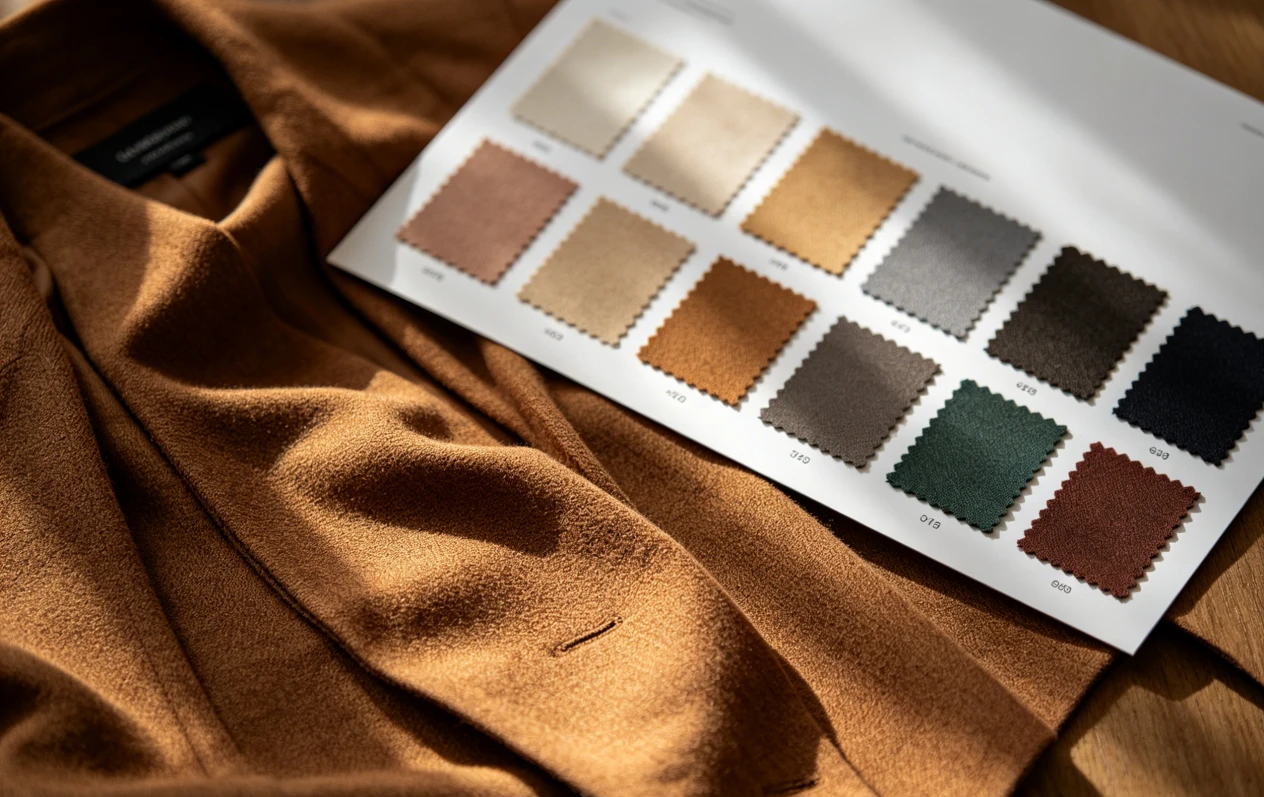
- A successful color process starts with a clear standard. Clients may provide Pantone references, physical fabric swatches, yarn cards, sample garments, brand color standards, or seasonal color palettes. We review these references and confirm the most practical approach for yarn selection or custom color development.
- When a color standard is unclear or difficult to reproduce, our team communicates with the client early to avoid unnecessary sample rounds and production delays.

- For many projects, existing yarn colors can provide a faster and more cost-effective solution. When a standard color is not available, we support custom color development based on the client’s target shade, order quantity, yarn composition, and production schedule.
- Different fibers absorb and present color differently. Wool, cotton, viscose, polyester, acrylic, and blended yarns may produce different results even when developed toward the same shade. This is why material and color decisions should be reviewed together.

- During sampling, we help compare the developed color against the approved standard and communicate any visible difference that may affect the final product. Once a color is approved, it becomes an important reference for bulk production.
- During production, we monitor color consistency as part of the quality control process. This helps reduce shade variation between batches and improves the consistency of the finished goods.

Our color matching support is especially valuable for custom knitwear, private-label programs, seasonal collections, and repeat orders where brand color consistency is important. By managing color standards from the beginning, Tesin helps clients achieve more predictable and professional production results.

Size & Fit Optimization
Creating Knitwear That Fits the Target Customer
Size and fit are not only technical details. They directly influence product comfort, brand consistency, customer satisfaction, return rates, and long-term business performance.
A garment may use quality yarn and attractive design, but if the size is inconsistent or the fit does not match the target market, the final product may still fail to meet customer expectations. Tesin Knitwear provides size and fit optimization support to help clients develop garments with accuracy, consistency, and commercial practicality.
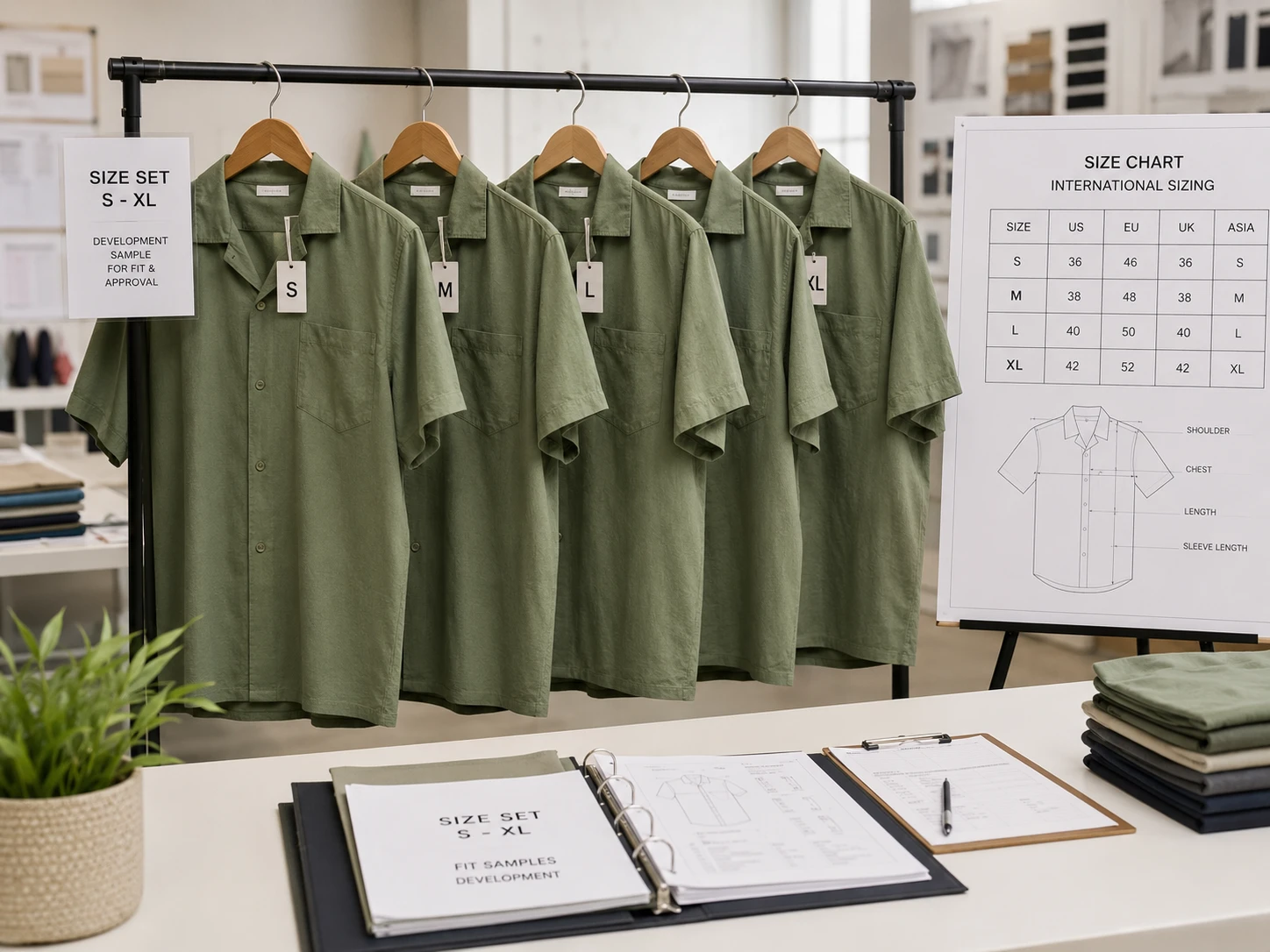
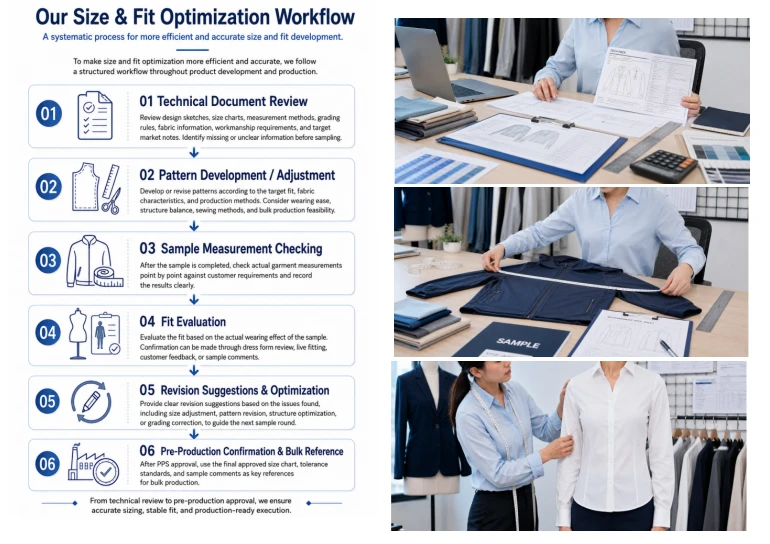
- Every brand has its own customer profile, fit preference, and market positioning. Some brands prefer relaxed and oversized silhouettes, while others focus on slim, structured, or performance-oriented fits. We review the client’s size chart, target measurements, garment type, and intended silhouette before development begins.
- This review helps identify potential issues in body width, garment length, shoulder proportion, sleeve length, armhole, neckline, hem, and other key measurement points.

- After sample completion, we compare actual sample measurements with the approved specification and review how the garment performs as a physical product. Knitwear fit can be affected by yarn composition, knit structure, gauge, stretch, washing, finishing, and garment weight.
- When adjustment is needed, we help clients revise measurements, refine proportions, and improve wearing comfort while maintaining the original design direction.

- Different markets may have different size expectations. A fit that works for one customer group may not be suitable for another. We help clients consider regional size standards, target consumer body types, retail positioning, and product category when reviewing fit.
- For repeat programs and core products, fit consistency is especially important because customers expect the same wearing experience across colors, seasons, and reorder batches.

- Bulk production requires clear measurement standards and realistic tolerance control. Our team helps monitor key measurement points during production so garments remain consistent with approved samples and size specifications.
- With better size and fit control, brands can reduce return risks, improve customer satisfaction, and create products that feel more reliable in the market.
