Yarn selection is one of the most important decisions in custom knitwear development.
The same sweater design can look, feel, and perform very differently depending on the yarn used. A change in fiber composition, yarn thickness, spinning method, or surface treatment can affect softness, garment weight, drape, warmth, durability, pilling performance, production cost, and even the final measurements of the garment.
For fashion brands, choosing a yarn is therefore not simply a matter of selecting a composition from a yarn card.
The right yarn should support the design concept while also meeting the target price, product positioning, production requirements, and customer expectations.
Understanding the main factors behind knitwear yarn selection can help brands develop better samples, reduce unnecessary revisions, and create products that are more suitable for commercial production.

1. Start With the Intended Product
Before selecting a yarn, it is important to define what kind of garment the brand wants to create.
A lightweight summer knitted top requires a very different yarn from a heavy winter cardigan. A premium cashmere sweater has different priorities from an everyday cotton pullover.
Brands should first consider questions such as:
- What season is the garment designed for?
- Should the garment feel soft, dry, fluffy, smooth, or compact?
- Is the product lightweight or heavy?
- Is warmth an important requirement?
- Does the garment need good shape retention?
- What is the target retail price?
- What level of durability is expected?
- How should the garment look after washing and repeated wear?
These questions help narrow down the suitable yarn options before sampling begins.
Without a clear product direction, brands may spend unnecessary time testing materials that do not match the intended result.
2. Understand the Role of Fiber Composition
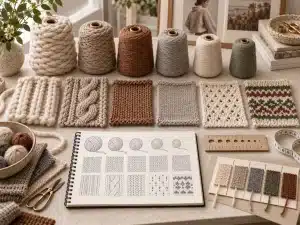
Fiber composition is usually the first information brands look at when selecting yarn.
Different fibers provide different characteristics in terms of softness, warmth, strength, moisture management, appearance, and cost.
Wool
Wool is widely used in sweaters, cardigans, knitted dresses, and winter accessories.
It provides natural warmth, elasticity, and a comfortable hand feel. However, different wool qualities can vary significantly in softness, fiber fineness, surface appearance, and price.
Merino wool, for example, is commonly selected when brands want a softer and finer appearance.
The final garment performance still depends on factors such as yarn construction, knitting density, gauge, and finishing.
Cashmere
Cashmere is often used for premium knitwear because of its softness, lightweight warmth, and luxurious hand feel.
However, cashmere quality varies according to raw material grade, fiber length, fineness, spinning quality, and production process.
A higher cashmere percentage does not automatically guarantee a better garment.
Brands should evaluate the actual yarn and finished sample rather than making decisions based only on the composition label.
Cotton
Cotton is commonly used for spring, summer, and transitional knitwear.
It can provide a breathable, natural, and comfortable hand feel. Depending on the yarn construction, cotton knitwear may feel soft and casual or clean and structured.
Cotton also behaves differently from wool during knitting and washing, so garment construction should be developed according to the selected yarn.
Viscose and Rayon Blends
Viscose-based yarns are often selected when brands want a smooth hand feel, fluid drape, and clean surface appearance.
These yarns can work well for lightweight knitted tops, dresses, skirts, and fashion-forward silhouettes.
However, their weight and drape need to be considered carefully because some constructions may stretch more easily during wear.
Synthetic Fibers
Polyester, nylon, and acrylic can be used alone or blended with natural fibers.
Depending on the product, synthetic fibers may help improve strength, stability, elasticity, price competitiveness, or shape retention.
The important point is to evaluate why the synthetic fiber is being used rather than automatically considering it a lower-quality option.
A well-designed blend may sometimes perform better for the intended product than a single-fiber yarn.
3. Fiber Composition Is Only Part of Yarn Quality
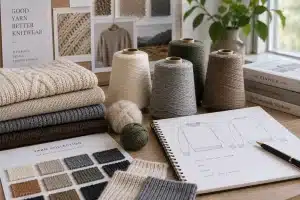
Two yarns with exactly the same fiber composition can produce very different sweaters.
For example, two yarns may both be labeled as 100% wool, but they may differ in:
- Fiber fineness
- Fiber length
- Yarn twist
- Yarn evenness
- Spinning method
- Surface hairiness
- Yarn strength
- Color consistency
- Shrinkage behavior
These differences can influence the appearance and performance of the finished garment.
For this reason, brands should avoid evaluating yarn only according to the fiber percentages shown on a label or quotation.
A yarn should ideally be reviewed through actual swatches and garment samples.
4. Yarn Count Must Match the Desired Garment Weight
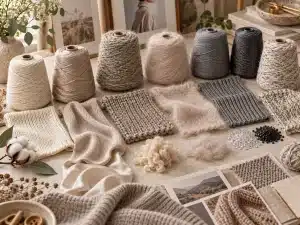
Yarn count describes the thickness or fineness of the yarn.
It is closely connected to garment weight, knitting gauge, fabric density, and final appearance.
A finer yarn is generally more suitable for fine-gauge knitwear, while thicker yarns are commonly used for heavier and more textured garments.
However, yarn count cannot be considered independently.
Factories may use multiple ends of a finer yarn together to achieve a particular thickness. This provides additional flexibility when developing different garments from the same yarn quality.
For example, one collection may use the same yarn in different numbers of ends for a lightweight sweater, cardigan, and heavier knitted jacket.
This approach can sometimes help brands create a more consistent collection while simplifying material sourcing.
5. Knitting Gauge and Yarn Selection Must Work Together
The knitting gauge refers to the type of machine and needle density used to produce the knitted fabric.
Different yarns are suitable for different gauges.
Fine-gauge machines are commonly used for lightweight and refined knitwear, while lower gauges are more suitable for chunky sweaters and heavier structures.
Choosing an unsuitable yarn for a particular gauge may lead to production problems such as:
- Unstable fabric structure
- Poor stitch definition
- Excessive garment weight
- Loose or uneven appearance
- Machine knitting difficulties
- Unexpected shrinkage
- Poor recovery
An experienced knitwear manufacturer can help match the yarn count with the appropriate machine gauge and knitting structure.
This technical relationship is especially important when converting a design sketch into an actual garment.
6. Consider the Target Hand Feel
Fashion brands often use terms such as:
- Very soft
- Fluffy
- Dry touch
- Smooth
- Lightweight
- Compact
- Brushed
- Clean
- Luxurious
These descriptions are useful, but different people may interpret them differently.
Whenever possible, brands should provide reference garments, fabric swatches, or clear visual examples.
The manufacturer can then recommend yarns that are closer to the desired result.
It is also important to understand that some hand-feel requirements involve trade-offs.
For example, a very loose and fluffy construction may create a softer surface, while a more compact structure may provide better stability.
The goal should be to find the most suitable balance for the specific product.
7. Color Availability Can Affect Cost and MOQ
Color selection can influence both development time and production quantity.
Many yarn suppliers maintain stock color cards for commonly used yarn qualities. Selecting an available stock color can often make production easier, particularly for smaller orders.
Custom dyeing may be necessary when the brand requires an exact Pantone shade or a unique seasonal color.
However, custom dyeing may involve:
- Minimum yarn quantities
- Lab dip development
- Additional lead time
- Color approval
- Dye lot variation control
- Additional material costs
For brands developing smaller collections, using available colors during the first production can provide greater flexibility.
Custom colors can then be introduced when order quantities increase.
8. Think About Yarn Performance Before Bulk Production
A yarn may look attractive on a cone or shade card but behave differently after knitting.
This is why yarn performance should be evaluated in the actual garment structure.
Important areas to review may include:
- Shrinkage
- Pilling
- Colorfastness
- Stretch
- Recovery
- Surface hairiness
- Hand feel
- Garment weight
- Dimensional stability
- Appearance after washing
Different brands may also have their own testing requirements depending on their market and product category.
If performance standards are important, they should be discussed during development rather than waiting until bulk production is completed.
Early evaluation gives both the brand and the factory more time to adjust the yarn, knitting structure, density, or finishing process.
9. Yarn Selection Has a Direct Impact on Garment Cost
Yarn is often one of the largest components of knitwear production cost.
However, the lowest-priced yarn does not necessarily produce the lowest overall garment cost.
A cheaper yarn may create additional problems if it has unstable shrinkage, inconsistent color, poor knitting efficiency, or requires additional finishing.
On the other hand, an unnecessarily premium yarn may make the garment too expensive for its intended retail position.
Brands should therefore evaluate yarn cost together with:
- Material consumption
- Garment weight
- Knitting efficiency
- Finishing requirements
- Quality expectations
- Production quantity
- Target selling price
A professional manufacturer can often recommend several yarn options at different price levels so the brand can compare the results.
10. Evaluate Yarn Consumption, Not Only Yarn Price
When comparing materials, the price per kilogram is only one part of the calculation.
The actual cost of yarn in a sweater also depends on how much material the garment consumes.
A heavier garment naturally requires more yarn.
Design features such as oversized silhouettes, long sleeves, large collars, cables, jacquard structures, and dense knitting can all increase material consumption.
For this reason, two sweaters made from the same yarn may have very different material costs.
During development, the factory can estimate garment weight and yarn usage after the construction and measurements become clearer.
This information helps brands understand how design decisions affect the final quotation.
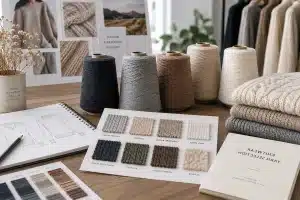
11. Consider Whether One Yarn Can Be Used Across Several Styles
Using the same yarn across multiple styles can be a practical strategy for collection development.
For example, one yarn quality may be used for:
- A crew-neck sweater
- A cardigan
- A knitted vest
- A polo sweater
- A knitted skirt
Different structures, colors, gauges, or yarn ends can still create visual variety.
At the same time, consolidating yarn usage may help simplify purchasing, color management, production planning, and repeat orders.
This approach can be particularly useful for smaller fashion brands that want to create a coordinated collection without purchasing too many different materials.
12. Do Not Select Yarn Only From a Small Swatch
A knitted swatch is useful for reviewing color, stitch definition, texture, and approximate hand feel.
However, it cannot show every characteristic of a finished garment.
The final product may behave differently once it includes:
- Full garment measurements
- Sleeves
- Neckline construction
- Rib trims
- Seams or linking
- Garment weight
- Washing
- Finishing
For example, a yarn that looks stable in a small swatch may create excessive garment weight when used in a long cardigan.
A soft structure that looks attractive on the table may stretch differently when worn.
For important styles, evaluating a complete garment sample is therefore essential.
13. Keep Future Reorders in Mind
Yarn availability should also be considered from a commercial perspective.
If a style performs well, the brand may need to place a repeat order several months later.
Before confirming an important yarn, it can be useful to understand:
- Whether the yarn is a regular program
- Whether colors are normally kept in stock
- Typical yarn lead time
- Whether the supplier can reproduce custom colors
- Whether the yarn may be discontinued
- Whether dye lot differences may occur
This is especially important for core products that may remain in the collection for several seasons.
Stable yarn sourcing can make repeat production much easier.
14. Questions Fashion Brands Should Ask Before Confirming a Yarn
Before moving into final sampling or bulk production, brands can discuss the following points with their knitwear manufacturer:
- Is this yarn suitable for the intended knitting gauge?
- What hand feel will it create after washing?
- Is the selected color available from stock?
- Does custom dyeing require a separate MOQ?
- What is the expected yarn lead time?
- What is the estimated garment weight?
- Are there known shrinkage or pilling considerations?
- Can the same yarn be used for other styles in the collection?
- Are alternative yarns available at different price levels?
- Can testing be arranged before bulk production?
- Is the yarn suitable for repeat orders?
- What finishing process is recommended?
Clear communication at this stage can prevent expensive changes later.
How a Knitwear Manufacturer Can Support Yarn Development
A professional custom knitwear manufacturer should do more than simply purchase the yarn specified by the customer.
During product development, the factory can help evaluate whether the selected material is suitable for the design, gauge, structure, target weight, hand feel, and price level.
Support may include:
- Recommending yarn qualities
- Providing available shade cards
- Developing knitted swatches
- Comparing different fiber blends
- Suggesting suitable gauges
- Estimating garment weight
- Testing different knitting densities
- Adjusting washing and finishing
- Reviewing production feasibility
- Arranging performance testing
This cooperation can reduce trial and error during sampling and help brands reach the desired product more efficiently.
Conclusion
Choosing the right yarn for custom knitwear requires more than selecting a fiber composition or comparing yarn prices.
Fiber quality, yarn count, spinning method, knitting gauge, garment structure, color availability, finishing, performance, cost, and production quantity all influence the final result.
For fashion brands, the most effective approach is to begin with a clear understanding of the intended product and then evaluate yarn options according to both design and production requirements.
A yarn should not only look attractive on a shade card. It should also perform well when knitted, washed, finished, worn, and produced at commercial scale.
By working closely with an experienced custom knitwear manufacturer during the early development stage, brands can make better material decisions, reduce unnecessary sample revisions, and create knitwear that balances appearance, comfort, quality, cost, and production efficiency.
At our knitwear factory, we support customers from yarn selection and sample development through bulk production and quality control. By evaluating yarn, gauge, structure, garment weight, hand feel, finishing, and commercial requirements together, we help fashion brands develop knitwear that is both creative and practical for production.