Ordering custom knitwear involves more than selecting a design and placing an order with a factory. From yarn sourcing and sample development to knitting, washing, finishing, inspection, and shipping, every stage affects the final delivery date.
When one stage is delayed, the entire production schedule may be affected. Late delivery can cause fashion brands to miss a launch date, lose part of a selling season, or pay additional costs for urgent air freight.
In many cases, production delays are not caused by a single major problem. They are usually the result of incomplete information, slow approvals, unavailable yarn, repeated design changes, or poor communication.
By planning early and working closely with the manufacturer, brands can make custom knitwear production more predictable. The following steps can help reduce delays and keep an order on schedule.
1. Start Production Planning Early
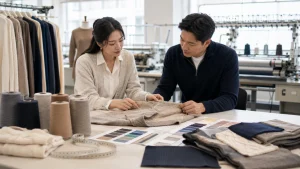
One of the most common mistakes is contacting a knitwear manufacturer too close to the required delivery date.
Custom knitwear production cannot normally begin immediately after an inquiry. Before bulk manufacturing starts, the factory may need to review the design, calculate yarn consumption, source materials, develop samples, confirm measurements, and test the knitting structure.
The more customized the garment is, the more development time it may require.
A basic sweater made with stock yarn may be relatively straightforward. However, a jacquard cardigan with several colors, custom buttons, embroidery, and branded packaging requires more preparation and coordination.
Brands should plan backward from the final delivery date. The schedule should include time for:
- Technical preparation
- Quotation and cost confirmation
- Yarn and color selection
- Sample development
- Sample revisions
- Bulk material purchasing
- Production
- Quality inspection
- Packing and shipping
It is also important to allow some extra time for unexpected issues. A schedule based on immediate approvals and perfect samples may not remain realistic once production begins.
Starting early gives the factory more flexibility to arrange materials, machinery, and workers. It also gives the brand enough time to review samples carefully without putting the delivery date at risk.
2. Prepare a Complete Tech Pack
A clear and accurate tech pack is one of the best ways to prevent production delays.
The tech pack communicates the brand’s requirements to the manufacturer. When important information is missing, the factory must stop and request clarification before calculating the price or developing a sample.
A knitwear tech pack should normally include:
- Garment sketches
- Measurement specifications
- Yarn composition and yarn count
- Gauge and stitch structure
- Color references
- Construction details
- Trims and labels
- Artwork placement
- Packaging requirements
Visual references are useful, but photographs alone are usually not enough. A reference image may show the overall appearance of a sweater, but it does not explain the exact measurements, fiber composition, stitch type, or finishing method.
The brand should also make sure all information is consistent. The sketch, written description, measurement chart, and artwork should not contradict one another.
For example, if the sketch shows a crew neck but the written notes request a V-neck, the factory cannot confidently continue until the detail is confirmed.
Before sending the tech pack, check the neckline, sleeve construction, rib width, garment length, button specifications, logo position, label placement, and washing requirements.
Clear information helps the factory understand the design correctly the first time. This reduces repeated questions, unnecessary sample revisions, and avoidable delays.
3. Confirm Yarn Availability Before Finalizing the Design
Yarn availability has a major influence on knitwear lead time.
Some yarns and colors are readily available from stock. Others must be specially spun, dyed, imported, or ordered according to a supplier’s minimum quantity.
Before finalizing a design, brands should ask the manufacturer whether the selected yarn can be sourced within the required schedule.
Important points to confirm include:
- Fiber composition
- Yarn count
- Available colors
- Minimum order quantity
- Dyeing lead time
- Supplier availability
- Suitability for the selected gauge and stitch
Stock yarn is often a practical option for small orders or projects with limited development time. It can reduce material preparation time and avoid the additional approval process required for custom dyeing.
Custom yarn provides greater control over fiber content, color, texture, and hand feel. However, it may require yarn sampling, lab-dip approval, dyeing, testing, and a higher minimum order quantity.
The yarn must also be suitable for the garment structure. A fine yarn designed for lightweight knitwear may not work well for a heavy cable-knit style. Similarly, some soft or brushed yarns may not produce clear jacquard patterns.
Brands should avoid approving a design before confirming that the required bulk yarn is available. Otherwise, the sample may be completed successfully, but production may still be delayed while the factory searches for suitable material.
4. Finalize the Design and Give Clear Sample Feedback
Sample development is a normal part of custom knitwear production. However, repeated or unclear revisions can significantly extend the timeline.
Major changes to the neckline, measurements, stitch structure, yarn, colors, or garment construction may require a new sample. They may also affect yarn consumption, pricing, production instructions, and material orders.
For example, changing a regular-fit sweater to an oversized fit increases yarn usage. Adding another jacquard color may require a new yarn order. Replacing a standard trim with a custom accessory may add a separate development process.
Brands should try to finalize major design decisions before approving the pre-production sample.
When reviewing a sample, feedback should be specific and consolidated. Comments from designers, buyers, and technical teams should be collected into one final document rather than sent through several separate messages.
The feedback should clearly explain:
- What is approved
- What needs to be changed
- The exact measurement adjustment
- Whether another sample is required
- Whether the change applies to every size or color
General comments such as “the shape does not look right” are difficult for a factory to follow.
A clearer instruction would be: “Reduce the shoulder width by 1.5 cm on each side and increase the body length by 2 cm.”
Marked photographs are also helpful because they show the exact location of the issue.
Samples should be reviewed promptly. The factory may not be able to continue with material purchasing or bulk production while waiting for approval. A delayed response from the brand can cause the original production slot to be lost.
5. Approve Colors, Trims, Labels, and Production Details Early
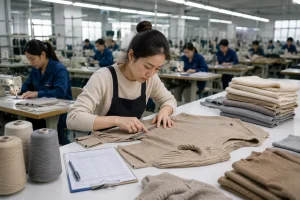
A knitwear order includes more than the knitted garment. Buttons, zippers, embroidery thread, labels, hangtags, packaging bags, and cartons may come from different suppliers.
Any unconfirmed component can delay production or shipment.
Custom trims often require extra time. A branded metal button may need artwork confirmation, mold development, color approval, and a supplier minimum order quantity. Woven labels and printed packaging may also require sampling before bulk production.
Brands should prepare their branding files early. Logos should be provided in a suitable high-resolution or vector format, and all text should be checked before printing.
Care-label information should be confirmed carefully, including:
- Fiber composition
- Washing instructions
- Size
- Country of origin
- Brand information
- Market-specific requirements
Color confirmation should also happen as early as possible. Screen colors are not always reliable, so physical standards or approved yarn swatches are preferable.
For custom-dyed yarn, the factory may provide lab dips. Delayed lab-dip approval will delay yarn dyeing, which will then delay knitting.
Before bulk production begins, the brand should approve the main production standard, including measurements, yarn, color, stitch structure, pattern placement, trims, labels, washing effect, hand feel, and packaging.
The final approved sample should represent the bulk product as closely as possible. Starting production with several unresolved details creates uncertainty and increases the risk of rework.
6. Check MOQ and Factory Capacity
Brands should understand both the manufacturer’s minimum order quantity and its available production capacity before confirming an order.
MOQ may apply to the total order, each style, each color, or the yarn itself. A factory may accept a small garment quantity, but a yarn supplier may require a larger quantity for custom dyeing.
When the order is below the required level, the manufacturer may need to suggest stock yarn, reduce the number of colors, or combine material purchasing with another order. These solutions can affect cost, appearance, and delivery time.
Production capacity is another important factor.
Knitwear factories are often busiest before autumn and winter selling seasons. During peak periods, knitting machines, linking workers, washing facilities, and finishing teams may already be scheduled for other orders.
Receiving a quotation does not always mean production capacity has been reserved.
Brands should confirm:
- When production can start
- How long the quoted lead time remains valid
- Whether a deposit is required
- When bulk yarn will be ordered
- Whether the delivery date is based on final sample approval
An order should not be treated as confirmed until the quantities, specifications, price, payment terms, and delivery requirements have been agreed.
Early order confirmation allows the factory to reserve machines, organize labor, and secure materials before the production season becomes too busy.
7. Monitor Production and Quality Control
Communication should continue after bulk production begins.
Brands do not need to request updates every day, but regular production reports can help identify potential problems before they become serious.
The factory may provide updates when:
- Bulk yarn arrives
- Knitting begins
- Linking starts
- Garments enter washing and finishing
- Inspection is scheduled
- Packing begins
For example, if one yarn color arrives late, the factory may be able to produce the other colors first. If a trim supplier reports a delay, an alternative may be discussed before the issue affects the shipping date.
Important approvals and changes should always be recorded in writing. Verbal communication can be useful, but the final instruction should be confirmed by email or in a shared document.
It is also better for the brand to appoint one main contact person. When several people send different instructions, the factory may not know which version is final.
Quality control should be included throughout production rather than left until the day before shipment.
The factory should check raw materials, knitting panels, garment construction, measurements, washing results, appearance, labels, and packaging.
In-line inspection allows problems to be corrected while production is still underway. If a measurement or construction issue is discovered only after the full order is completed, reworking the garments may cause a serious delay.
Testing requirements should also be confirmed early. Depending on the product and destination market, the brand may require tests for shrinkage, colorfastness, pilling, or fiber composition.
Laboratory testing takes time, so it should be included in the original production schedule.
8. Plan Shipping and Allow Extra Time
Production completion is not the same as final delivery.
After manufacturing, the order may still need final inspection, packing, freight booking, export documentation, transportation, and customs clearance.
Brands should decide the shipping method before the goods are finished.
Sea freight is usually more suitable for larger orders with enough transit time, while air freight is faster but more expensive. Waiting until the last minute to choose a shipping method may increase costs or create additional delays.
The factory or freight forwarder may need information such as:
- Delivery address
- Shipping method
- Incoterms
- Carton requirements
- Commercial invoice details
- Packing-list format
- Product descriptions
- Destination labeling requirements
Freight capacity may be limited during peak periods, and public holidays can affect factories, suppliers, ports, and logistics companies at the same time.
For this reason, the delivery plan should include not only production time but also inspection, freight booking, transit, and customs clearance.
A reasonable time buffer should also be added before the required delivery date. Even a well-managed order can face unexpected yarn delays, additional sample revisions, machine maintenance, or shipping disruptions.
The buffer should protect the brand’s launch date rather than become extra production time.
Conclusion: Work with an Experienced Custom Knitwear Manufacturer
Avoiding production delays in custom knitwear requires more than setting a delivery date. It depends on early planning, complete technical information, timely sample approvals, stable design decisions, reliable material sourcing, and clear communication throughout the project.
Choosing the right manufacturing partner is equally important. Some factories may offer a lower quotation, but price alone does not always reflect the true cost of production. Unstable quality, inaccurate samples, poor communication, material problems, and missed production schedules can lead to repeated revisions, rework, urgent shipping, and delayed product launches. These issues often cost brands more time and money than the initial price difference.
From a long-term perspective, a reliable manufacturer can provide greater value by helping brands reduce uncertainty and avoid unnecessary risks. Consistent quality and dependable delivery make it easier to plan product launches, manage inventory, control costs, and build confidence with retailers and customers.
An experienced knitwear manufacturer should not simply follow an order. It should help identify possible production risks, recommend suitable yarns and knitting techniques, provide realistic lead times, and keep the customer informed throughout sampling and bulk production.
At Tesin Knitwear, we understand that every custom knitwear project has different design requirements, order quantities, quality standards, target prices, and delivery expectations. Our team works closely with fashion brands throughout the entire process, from design review and yarn selection to sample development, bulk production, quality control, and shipment preparation.
We focus on stable product quality and reliable delivery because both are essential to a successful long-term partnership. By identifying potential challenges early and maintaining clear communication throughout the order, we aim to make custom knitwear production more organized, transparent, and predictable.
Whether you are developing a basic sweater collection, a detailed jacquard design, a custom cardigan, or a complete seasonal knitwear range, careful preparation and the right manufacturing partner can make a significant difference.
If you are planning a new custom knitwear collection, contact Tesin Knitwear to discuss your designs, quantities, materials, target prices, and required delivery date. The earlier we understand your project requirements, the better we can help you create a realistic production plan, reduce avoidable delays, and support a smoother production process.
When evaluating a custom knitwear manufacturer, it is worth looking beyond the initial quotation and considering the factors that will affect your business in the long run. Consistent quality, clear communication, dependable lead times, and responsive support can all help reduce hidden costs and unnecessary risks.
What matters most to your brand when choosing a knitwear manufacturing partner: price, quality, communication, or reliable delivery?