Meta Description:
Learn how professional knitwear manufacturers control quality from yarn selection and sampling to bulk production, finishing, inspection, and shipment.
Introduction
In knitwear manufacturing, quality is not only decided at the final inspection stage. It is built step by step throughout the whole production process — from yarn selection and sample development to knitting, linking, washing, finishing, labeling, packing, and shipment.
For fashion brands, especially those developing sweaters, cardigans, knitted tops, vests, hoodies, and mixed-media knitwear, consistent quality is essential. A beautiful design can lose its value if the bulk production has unstable sizing, uneven hand feel, color differences, poor workmanship, or incorrect labels.
This is why a reliable knitwear factory must have a clear quality control system. Good quality control helps reduce production risks, improve customer confidence, and ensure that the final garments match the approved sample and technical requirements.
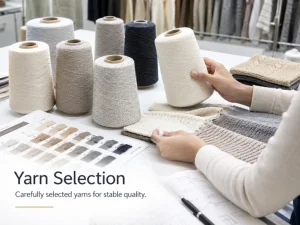
1. Quality Starts with Yarn Selection
Yarn is the foundation of knitwear. Different yarn compositions, counts, twists, and textures will directly affect the hand feel, weight, shrinkage, pilling performance, elasticity, and final appearance of the garment.
Before starting production, the factory should confirm key yarn details with the customer, including:
- Yarn composition
- Yarn count
- Color reference
- Hand feel requirement
- Gauge requirement
- Target garment weight
- Special performance requirements, such as anti-pilling or softness
For natural fibers such as wool, cotton, cashmere, and blends, quality control should pay close attention to color consistency, yarn strength, softness, and shrinkage. For synthetic or blended yarns, the factory should also check stability, stretch recovery, and surface appearance.
If the yarn quality is not stable, problems may appear later in bulk production, such as uneven knitting, color shading, size variation, or poor hand feel. Therefore, professional yarn checking is the first step in knitwear quality control.
2. Sample Approval Is the Standard for Bulk Production
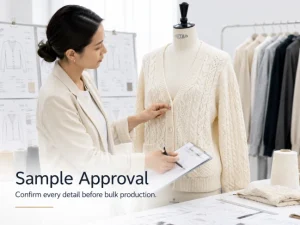
Before bulk production, sample approval is one of the most important steps. The approved sample works as the production standard for the factory, the brand, and the inspection team.
A professional knitwear factory will check the sample carefully before sending it to the customer. Important points include:
- Correct garment measurements
- Accurate knitting structure
- Proper gauge and density
- Correct color and yarn
- Clean workmanship
- Suitable hand feel
- Correct trims and labels
- Overall fit and appearance
Once the customer approves the sample, any changes should be confirmed in writing. This helps avoid misunderstandings during bulk production. For example, if the customer changes the sleeve length, body length, neckline shape, color, or label position, the factory must update the technical file and inform all related production departments.
Without a confirmed sample and clear written instructions, bulk production may face serious risks.
3. In-Line Inspection During Knitting and Linking
Knitwear is different from woven garments because the fabric and garment shape are often created during the knitting process. This means problems can appear early if the knitting structure, tension, density, or measurements are not controlled properly.
During production, in-line inspection should focus on:
- Knitting defects
- Wrong gauge or wrong structure
- Uneven tension
- Yarn breakage
- Color difference
- Incorrect panel size
- Loose stitches
- Linking or seam problems
For sweaters, cardigans, and knitted tops, linking quality is especially important. Poor linking may cause open seams, uneven edges, uncomfortable wearing, or an unprofessional appearance.
By checking problems during production instead of waiting until final inspection, the factory can correct issues earlier and reduce waste.
4. Size Control and Shrinkage Management
Size control is one of the biggest challenges in knitwear manufacturing. Unlike woven garments, knitwear may change after washing, steaming, or wearing because knitted structures are more flexible and elastic.
A professional factory should check measurements at different stages:
- Before washing
- After washing
- After ironing or finishing
- Before packing
The factory should compare the actual measurements with the approved size chart and allowed tolerance. Key measurement points usually include chest width, body length, shoulder width, sleeve length, cuff width, hem width, neckline width, and armhole.
For bulk production, random measurement checks should be done throughout the order. If size deviation is found, the factory should stop and analyze the reason immediately. Possible causes include yarn tension, washing shrinkage, incorrect pattern, knitting density, or finishing method.
Good size control helps ensure that the final garments fit properly and meet the customer’s requirements.
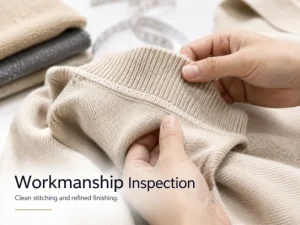
5. Workmanship and Appearance Inspection
Workmanship affects both product quality and brand image. Even if the material and size are correct, poor workmanship can make the garment look cheap or unreliable.
For knitwear products, workmanship inspection should include:
- Clean surface appearance
- No broken holes
- No skipped stitches
- No open seams
- No dirty marks or oil stains
- No obvious color shading
- Clean thread trimming
- Smooth neckline, cuffs, and hem
- Symmetrical shape
- Correct pocket, zipper, button, or trim placement
For styles with special design details, such as jacquard, intarsia, cable knit, embroidery, fabric combination, or cut-out panels, the inspection should be even more careful. These details often create higher visual value, but they also require stronger production control..
6. Label, Hangtag, and Packing Check
For export orders, labels and packaging are also important parts of quality control. Incorrect labels may cause customer complaints or shipment delays.
Before packing, the factory should check:
- Main label
- Size label
- Care label
- Country of origin
- Brand logo
- Hangtag
- Barcode
- Polybag
- Carton mark
- Packing ratio
All label information should match the customer’s approved artwork and order details. Care label content should be checked carefully, especially fabric composition and washing instructions.
Packing also needs to follow customer requirements. For example, some brands require one piece per polybag, specific folding methods, size stickers, carton labels, or special sustainable packaging.
7. Final Inspection Before Shipment
Final inspection is the last quality gate before shipment. It should not be treated as a simple formality. A professional final inspection should confirm whether the bulk production matches the approved sample, purchase order, size chart, label instructions, and packing requirements.
The inspection usually includes:
- Overall appearance
- Measurements
- Workmanship
- Color consistency
- Fabric hand feel
- Label and hangtag
- Packing method
- Quantity and carton information
If problems are found, the factory should record them clearly and provide solutions, such as repair, rechecking, repacking, or remaking defective pieces when necessary.
Conclusion
Quality control in knitwear manufacturing is a complete process, not a single step. From yarn checking and sample approval to in-line inspection, size control, workmanship checking, label confirmation, and final inspection, every stage affects the final product quality.
For fashion brands, working with a knitwear factory that understands quality control can reduce production risks and improve the stability of each order. A reliable factory should not only produce garments, but also help customers identify problems early, communicate clearly, and deliver consistent bulk production.
At our knitwear factory, we support custom knitwear development, sample making, fabric combination styles, and bulk production follow-up. We focus on clear communication, detailed checking, and stable quality control to help brands bring their knitwear designs into production with confidence.